How to Navigate the Disney Magic Without Feeling Overwhelmed
If you’re thinking about Disney Magic navigation, you’re not alone. One of the most common concerns adults have—especially on a first Disney cruise—is simply figuring out where they’ll actually spend their time and how to move around the ship without feeling overwhelmed. The good news is that navigating the Disney Magic is much easier than it first appears once you understand which areas truly matter for adults.
This article focuses on real, lived experience—not a full ship tour—and shows how most adults naturally settle into just a few key decks.
The Reassuring Truth: Most Adults Only Need 3 Decks (Plus Your Stateroom Deck)
Here’s the big mindset shift that makes how to navigate the Disney Magic much easier:
Other than the deck where your stateroom is located, most adults only need to focus on three decks:
- Deck 3 (the ship’s “home base” for adult life)
- Deck 4 (the calmer connector deck where adults slow down)
- Deck 9 (a destination deck you visit on purpose)
Everything else is situational—and many adults never spend meaningful time there at all.
Deck 3 on the Disney Magic: The Adult “Home Base” Deck
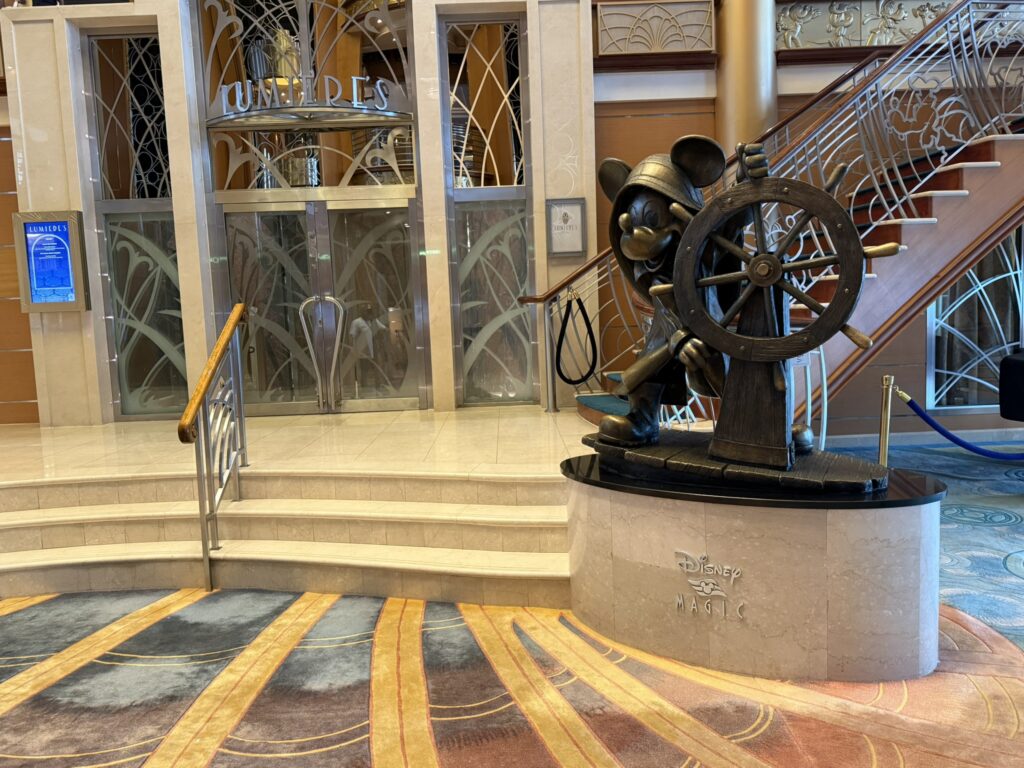
If you only remember one thing about navigating the ship, remember this: Deck 3 is where adult life naturally happens.
On most sailings, Deck 3 is where you’ll repeatedly return for the parts of cruising that make the day feel structured and easy:
- Main dining (depending on rotation)
- The Walt Disney Theatre (shows and events)
- Lounges and evening spaces
- Guest Services and the central hub areas
Why it matters: when you feel even slightly turned around, Deck 3 tends to “re-center” you quickly.
Deck 4 on the Disney Magic: The Calm Connector Adults Appreciate
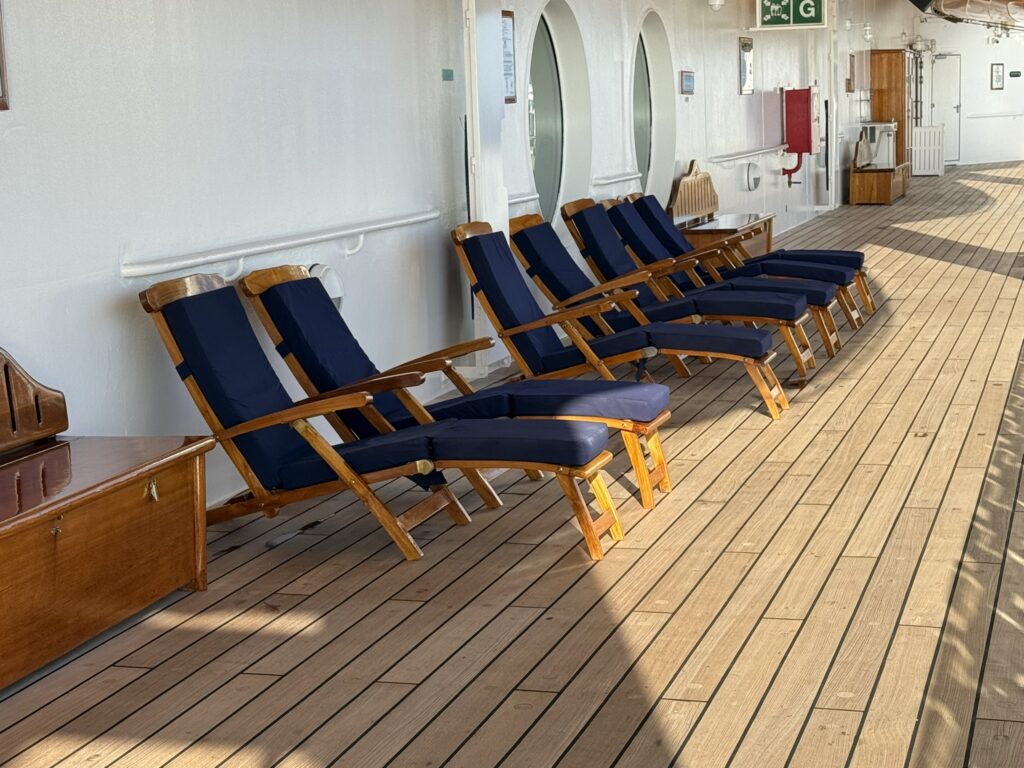
Deck 4 is one of the most underrated decks for adults—especially anyone who prefers a quieter, less crowded pace.
Deck 4 often becomes the deck where you:
- Walk and decompress
- Reset between activities
- Enjoy calmer spaces without the “busy ship” feeling
For many adults (including us), Deck 4 is also ideal between an early show and a later dinner—because it’s easier to slow down here without feeling like you’re in the middle of everything.
A favorite adult stop: Cat Soul Lounge is a great example of the kind of space adults gravitate toward: comfortable, unhurried, and perfect for that “in-between” time on an evening onboard.
Deck 9 on the Disney Magic: A Destination Deck (Not a Place to “Live”)
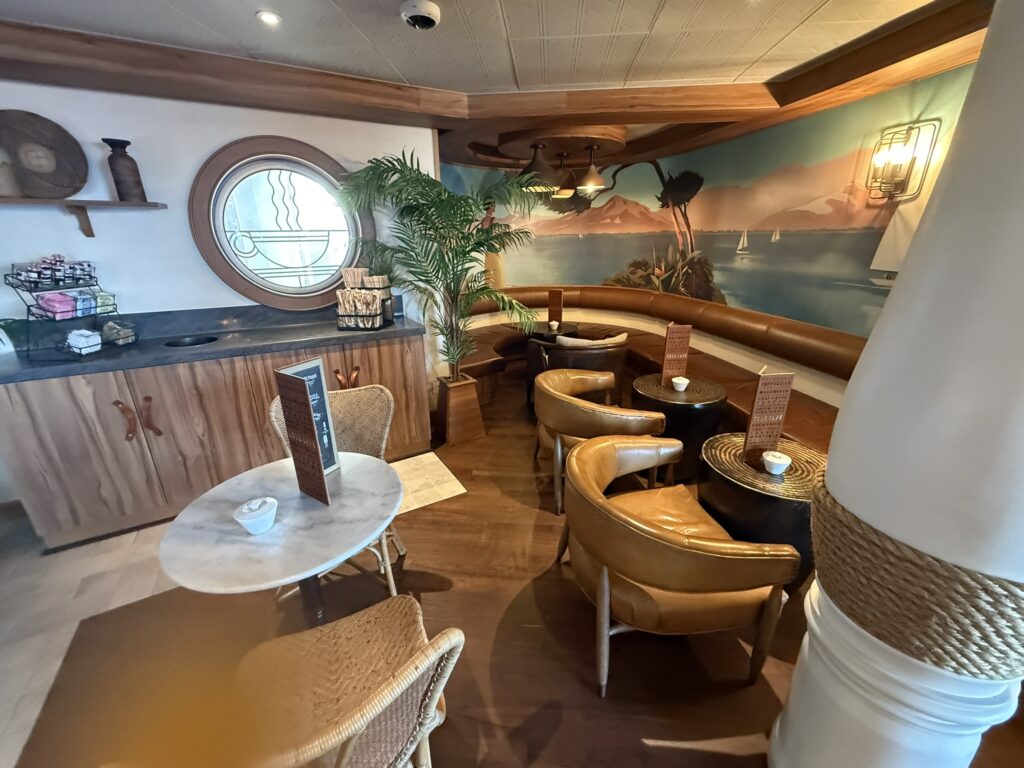
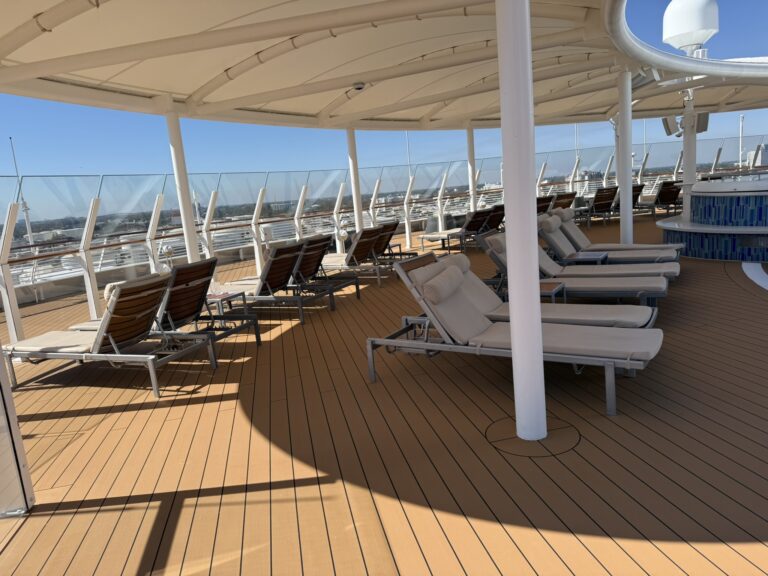
Deck 9 is where many of the most obvious cruise visuals happen—pools, casual food, and beverage stations—so first-timers often assume they’ll spend all day up there.
In reality, most adults visit Deck 9 rather than base their day there.
Deck 9 works best when you treat it like a destination:
- Go up intentionally (food, drink, a specific activity, a quick walk)
- Pick calmer times (early morning and later afternoon are often more relaxed)
- Leave easily once you know the quickest elevator/stairs back down
This approach keeps Deck 9 enjoyable instead of overwhelming.
How to Navigate the Disney Magic More Easily: Signs, Elevators, and “Quiet Guidance”
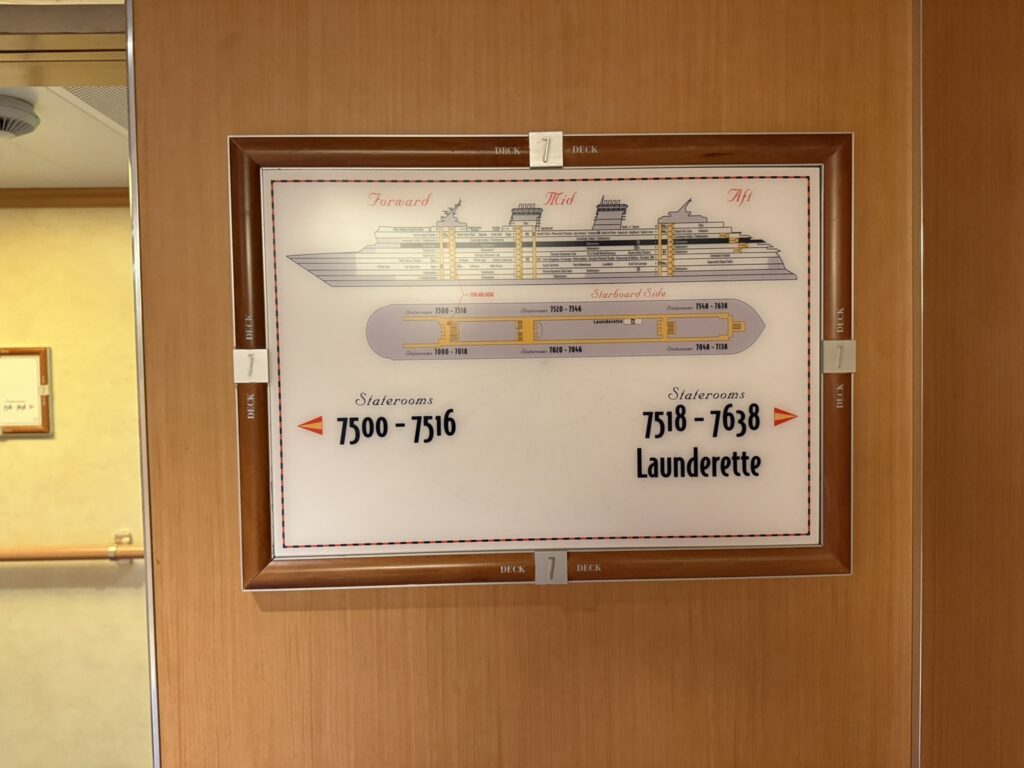
One reason Disney ships feel less stressful than many cruise ships is that navigation help is built in everywhere—often in subtle ways.
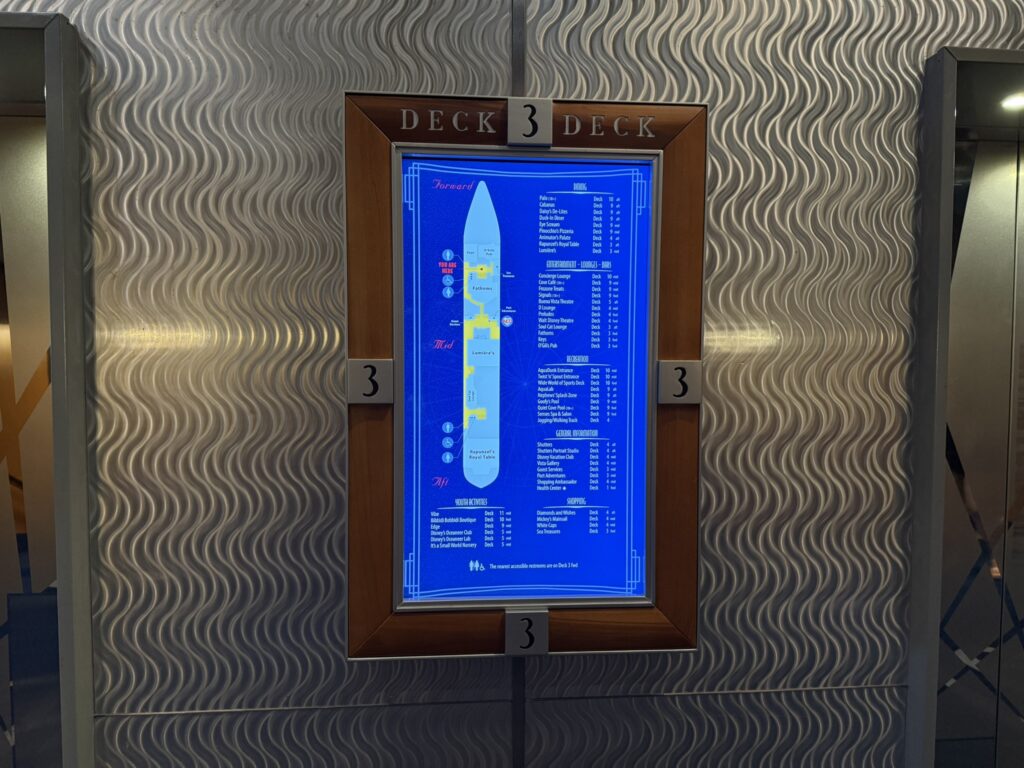
Elevator Deck Summaries
Near elevators, you’ll often see clear deck summaries that make it easy to confirm:
- what’s on your current deck
- what’s above or below you
- which deck you actually need
Directional Signs Around the Ship
Disney’s signs tend to be clean and readable. Once you notice them, you’ll start relying on them without even thinking about it.
Disney Magic Navigation Handy Trick: Carpet Direction Cues
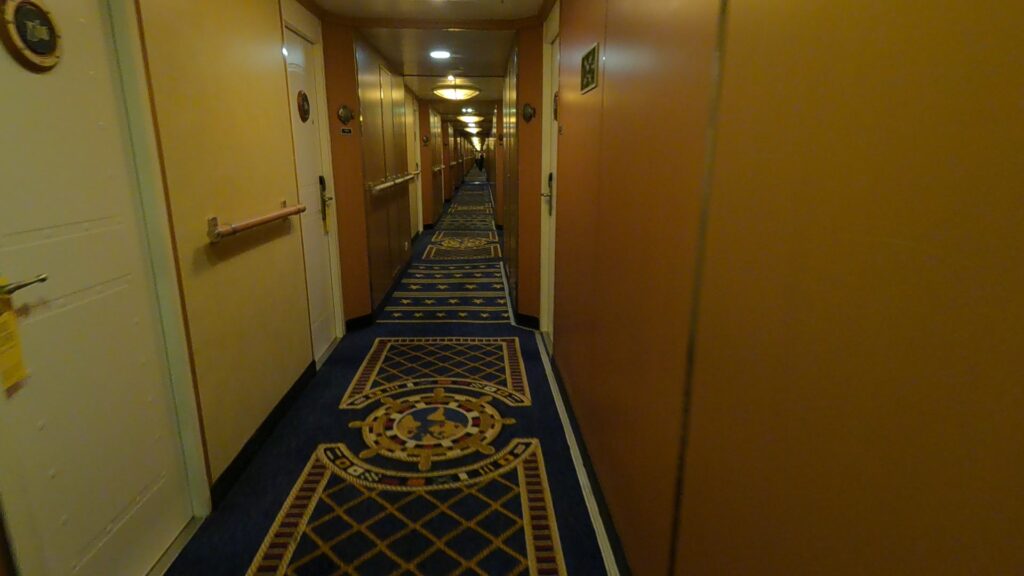
On many ships (including the Magic), carpet patterns can quietly help you understand direction—whether you’re moving toward the front or the back. You don’t have to “study” it—just notice it once and it becomes surprisingly useful.
Deck Maps in the Disney Cruise Line Navigator App
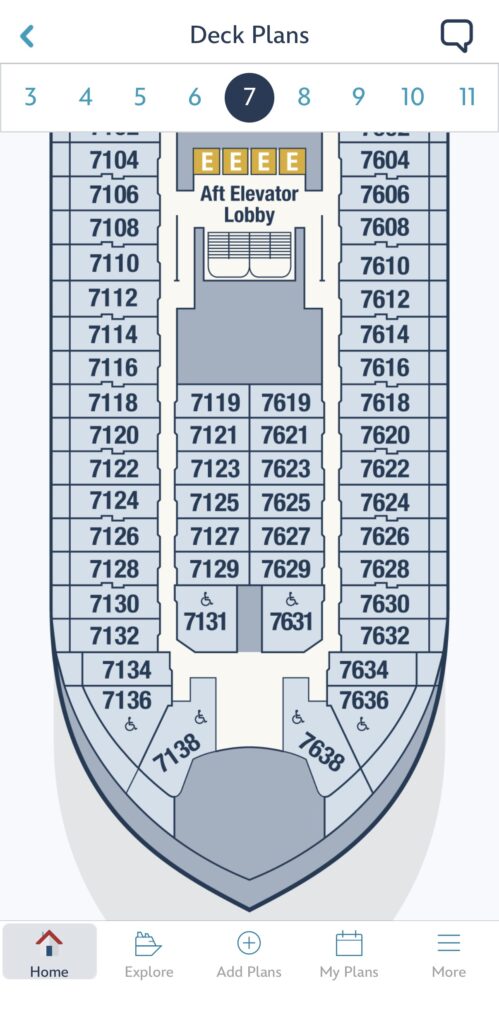
Once you’re on board, the Disney Cruise Line Navigator app gives you deck maps right on your phone. You may not use it constantly, but it’s reassuring to know you always have the ship map in your pocket.
Secondary Decks to Know About (But You May Hardly Use)
If you’re cruising as adults, there are a few decks you might hear mentioned that are useful to know why you’d go there—without assuming you’ll spend time there.
Disney Magic Navigation Deck 1: Medical and Some Port Exits
Deck 1 is where the ship’s medical facility is located. Most guests never need it, but it’s helpful to know the purpose:
- If you feel unwell and are directed there, that’s where you’d go.
- On some itineraries, Deck 1 may also be part of the flow for disembarking on port days.
Disney Magic Navigation Decks 5 and 11: Kids Clubs (If Grandkids Are Traveling With You)
If you’re traveling with grandchildren, kids clubs become relevant. If you’re cruising adult-only, you may never spend meaningful time on those decks—and that’s completely normal.
Disney Magic Navigation Deck 10: Palo (By Reservation)
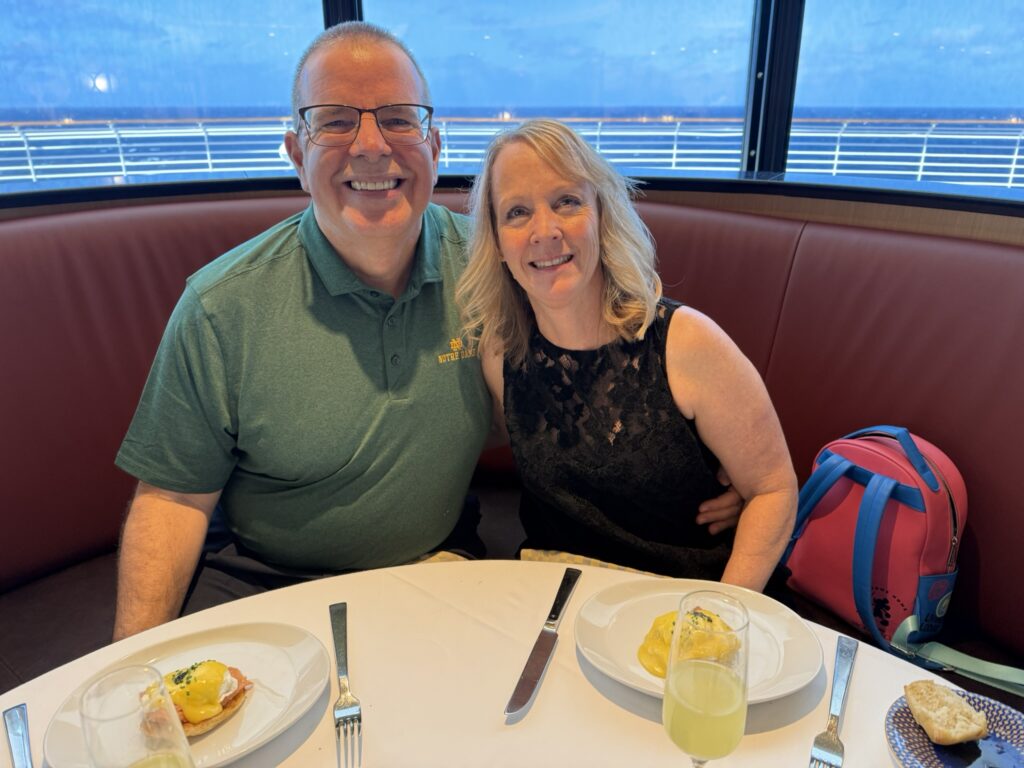
Palo is not part of everyday navigation. It’s a reservation-based plan:
- you go when you’ve booked it
- and then you return to your normal adult flow on Decks 3, 4, and 9
Disney Magic Navigation Simple Takeaway: How to Navigate the Ship as an Adult
If you want the simplest possible way to remember how to navigate the Disney Magic, it’s this:
- Deck 3 = your anchor
- Deck 4 = your calm connector
- Deck 9 = your destination deck
- Your stateroom deck = your personal base
You don’t need to memorize the whole ship. You just need a small mental map that matches how adults actually spend time onboard.